
Brown University’s Open Curriculum and Educational Freedom
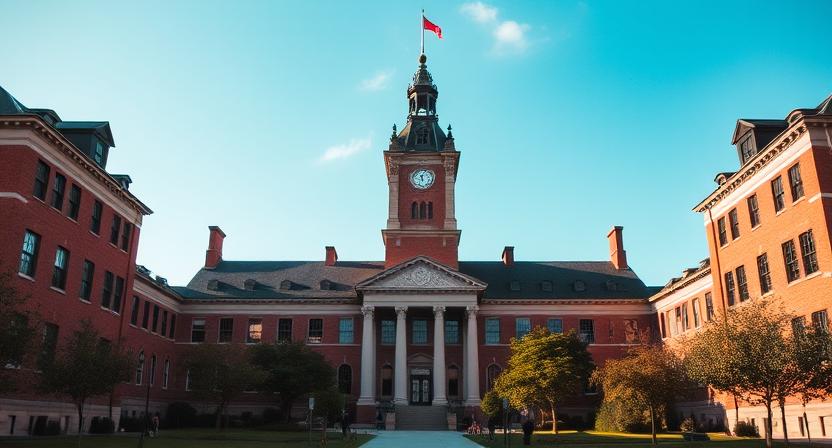
Brown University, located in Providence, Rhode Island, is widely recognized as one of the most distinctive members of the Ivy League. Unlike its peers, Brown has cultivated an identity centered on freedom, exploration, and student agency. Its hallmark is the Open Curriculum, a model that gives students extraordinary flexibility in designing their own education. Yet Brown is more than just an experiment in curriculum design; it is a university with a deep commitment to intellectual rigor, interdisciplinary learning, civic engagement, and public good. Understanding how Brown approaches education reveals not only what makes the institution unique but also what it contributes to the larger conversation about higher learning in America.
Philosophy of Education at Brown
Brown’s philosophy is built on several pillars: curiosity, independence, depth, and social responsibility. Education here is not framed as simply meeting requirements or gaining credentials but as shaping one’s mind, character, and path in society. Students are encouraged to explore widely across disciplines, engage in critical inquiry, and connect their academic pursuits with real-world challenges. The institution expects its students to take ownership of their learning, crafting a personal narrative that balances intellectual breadth with disciplinary mastery.
This philosophy sets Brown apart. Where many universities insist on a core curriculum, Brown trusts its students to exercise maturity and responsibility in choosing their courses. It is a model rooted in the belief that education thrives when freedom is combined with accountability.
The Open Curriculum in Practice
The Open Curriculum, introduced in 1969, remains Brown’s defining feature. Its most striking aspect is the absence of required distribution courses. Students are not compelled to take a prescribed set of classes across the sciences, humanities, and social sciences. Instead, they design their own educational journey, guided by advisors and faculty mentors.
Within this freedom, several principles still apply. Every student must complete at least one concentration, which is Brown’s version of a major. Concentrations demand depth, ensuring students gain expertise in a field even while exploring broadly elsewhere. Brown also requires students to demonstrate competence in writing, a skill considered essential across all disciplines. Beyond these foundations, students have immense flexibility, including the ability to take courses for a grade or on a satisfactory/no-credit basis. This grading option encourages academic risk-taking, allowing students to experiment with unfamiliar fields without fear of damaging their academic record.
Perhaps most revolutionary is the opportunity to design independent concentrations. If existing majors do not align with a student’s vision, they may propose a self-designed program that spans multiple disciplines. This possibility exemplifies Brown’s commitment to creativity and independence, encouraging students to see connections and pursue passions that defy traditional boundaries.
Signature Programs and Opportunities
Brown’s academic environment extends beyond the classroom through programs designed to merge theory and practice. Undergraduate research is a core component of the experience, with students encouraged to collaborate with faculty on projects across the humanities, sciences, and social sciences. Many courses incorporate collaborative inquiry, where students work in teams to tackle questions that do not yet have clear answers.
Community-based learning is another hallmark. Students partner with local organizations in Providence, applying their academic skills to address real challenges in education, health, housing, and social justice. The Swearer Center for Public Service plays a pivotal role in connecting students with opportunities for civic engagement, reinforcing Brown’s emphasis on education as a tool for the common good.
Brown also offers unique programs like the eight-year Program in Liberal Medical Education (PLME). This track integrates undergraduate study with medical training, allowing aspiring physicians to explore the liberal arts deeply before beginning professional preparation. The PLME illustrates how Brown balances freedom with structured pathways, offering students a holistic foundation for specialized careers.
Student Experience and Growth
At the heart of Brown’s education is the student experience. Life at Brown is defined by intellectual exploration and a supportive academic culture. Students report that the Open Curriculum encourages them to take courses outside their comfort zones, from advanced science labs to creative writing workshops. Because exploration is built into the culture, students often discover passions they had not anticipated before arriving on campus.
The grading flexibility further supports this spirit of discovery. Taking a course on a satisfactory/no-credit basis allows students to focus on learning for its own sake rather than worrying about GPA calculations. This reduces stress and creates an environment where intellectual curiosity is the primary driver.
Advising plays a crucial role in this process. Faculty advisors, peer mentors, and academic deans guide students as they navigate choices. While freedom can be overwhelming, structured advising ensures that students maintain coherence in their academic plans and meet the expectations of their chosen concentrations.
Strengths of Brown’s Educational Model
Brown’s model produces several distinctive strengths. First is the culture of academic freedom, rare at the level Brown practices it. Students are trusted to make decisions that align with their goals, which fosters independence and maturity.
Second, the combination of breadth and depth ensures students leave with both a broad worldview and specialized knowledge. Interdisciplinary combinations flourish here; a student might merge environmental studies with economics, or philosophy with neuroscience, crafting unique perspectives on global issues.
Third, the environment promotes intellectual risk-taking. Freed from rigid requirements and GPA anxiety, students experiment, innovate, and approach problems creatively. This fosters resilience, adaptability, and openness to change — traits increasingly valued in today’s world.
Finally, Brown integrates education with social responsibility. Through community partnerships, research with impact, and global initiatives, the university demonstrates how academic work can intersect with pressing social and ethical issues.
Challenges and Critiques
Yet Brown’s approach is not without challenges. The freedom of the Open Curriculum can create choice overload. Some students struggle to design a coherent path, and without strong advising, the risk of fragmentation is real. This makes advising crucial, but advising quality can vary, leading to uneven experiences.
Another challenge lies in external professional requirements. Students aiming for careers in medicine, law, or engineering must still meet strict prerequisites, which can constrain their freedom. In practice, this means their choices may be less open than the curriculum suggests.
Additionally, while the model encourages exploration, there is a risk that some students remain within their comfort zones, choosing courses they already excel in rather than venturing into difficult or unfamiliar fields. Ensuring that all students challenge themselves meaningfully remains an ongoing effort.
Broader Impact and Educational Significance
Brown’s influence extends beyond its campus. The Open Curriculum has inspired other institutions to reconsider rigid cores and experiment with student-centered models. While few universities have replicated Brown’s approach wholesale, many have adopted elements such as flexible general education, interdisciplinary majors, and expanded elective freedom.
Brown thus plays a vital role in shaping the conversation about higher education. It raises fundamental questions: Should universities prescribe learning paths, or should they empower students to define their own? How can institutions balance freedom with accountability? And how should higher education prepare graduates not only for careers but also for lives of meaning and contribution?
Looking to the Future
As Brown continues to evolve, several priorities are clear. Strengthening advising systems will remain crucial, ensuring that all students — especially those from underrepresented backgrounds — can take full advantage of the Open Curriculum. Expanding opportunities in emerging fields such as climate studies, artificial intelligence, and global health will help students connect their education to pressing challenges of the 21st century. Brown will also need to maintain its balance between freedom and structure, perhaps by offering optional themes or pathways that guide exploration without imposing rigid requirements.
Conclusion
Brown University stands as a bold experiment in educational philosophy. By dismantling traditional requirements and entrusting students with extraordinary freedom, it has created a culture where curiosity, independence, and social responsibility thrive. This model may not be for everyone, but for students eager to chart their own paths, it offers a transformative experience that combines intellectual freedom with purposeful engagement. In a time when higher education faces scrutiny over cost, relevance, and rigidity, Brown remains a beacon of what education can be when designed around trust, exploration, and the belief that learning is not about checking boxes but about expanding horizons.